
Ⅲ. Environmental Leadership
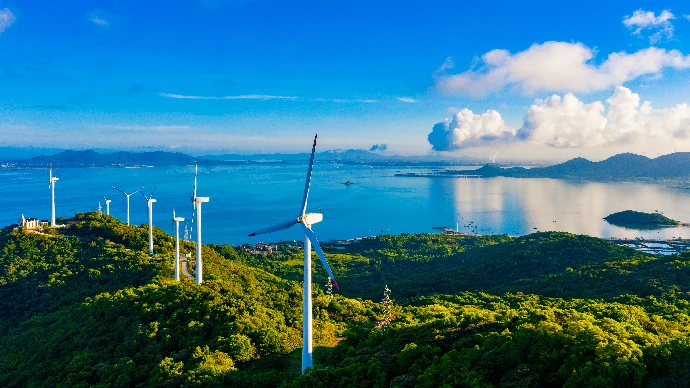
Strategic responses to environmental issues
Our society and businesses are supported by the bounties of nature, such as water, soil, forests, and marine resources.
However, the increasing intensity of disasters caused by climate change in recent years and the degradation of the natural environment are having a signicant impact on people’s lives and corporate activities.
Our approach to Environmental Leadership is one that views climate change and nature restoration not as separate issues, but as an integrated, interrelated issue. Through the power of finance, we aim to support the transition of society as a whole toward a more sustainable future.
In Japan in particular, we leverage our capital strength and influence as an asset owner, our involvement in international rule-making, and the expertise we have cultivated through sustainability investment.
Through engagement with investee companies as well as transition finance and impact investment, we support efforts to address climate change and nature-related challenges.
Additionally, our environmental conservation activities tailored to the local issues of each region where we conduct business will contribute to the realization of a sustainable environment and society.
Daiichi Life Group is currently focusing on enhancing management from both financial and non-financial perspectives. To further refine our Core Materiality, a key element of this strategy, we engaged in in-depth discussions with internal and external stakeholders in FY2025 to clarify how initiatives addressing our Core Materiality can create social value while enhancing both financial performance and corporate value. Through this process, we identied priority themes on which we will focus our efforts.
For Environmental Leadership, we have established the following three priority themes.
| Priority Themes | Underlying Social Issues and Why the Group Is Addressing Them |
|---|---|
| ⑥ Addressing Environmental Issues Through Investment and Financing* |
|
| ⑦ Contributing to Nature Positive Through Environmental Conservation Activities |
|
| ⑧ Engaging in and Contributing to International Rule-Making |
|
- *Implemented at: DL, DFL
Climate Change and Natural Capital Initiatives
Basic Approach
Climate change is having severe impacts on societies and economies worldwide. More than half of the world’s GDP is estimated to be derived from nature and ecosystems, and natural capital is also an essential foundation for the Group’s business activities. The two are also said to be closely related, as heavy rains, floods, and droughts caused by climate change can lead to the degradation of natural capital.
Based on this recognition, Daiichi Life Group, in compliance with the Group’s Vision and Group Action Principles for Environmental Initiatives, considers that the conservation of the local environment, climate change countermeasures, global environmental protection, the preservation of natural capital and biodiversity, and the development of the circular economy are its corporate social responsibilities as a member of society, and strives to take environmentally friendly actions throughout its business activities.
In response to such ideas, the Group has defined Environmental Leadership as an important issue in the Medium Term Management Plan, and is committed to strategic responses to environmental challenges, particularly climate change and natural capital. Specifically, we clearly define the environmental issues that our Group should prioritize and are steadily advancing relevant initiatives, such as the establishment, execution, and periodic updates of our Net Zero Transition Plan, as well as information disclosures aligned with the TNFD recommendations and nature-related transition plans.
Environmental Action Policy for the Daiichi Life Group
Basic Concept
As a member of society, Daichi Life Group recognizes its corporate social responsibility to preserve the environment in each region, to protect the global environment, including climate change, to preserve natural capital and biodiversity, and to build a recycling-oriented society. Daiichi Life Group works to preserve the environment on a daily and continuous basis in accordance with the following action guidelines, and continuously improves its efforts to contribute to the sustainable development of society.
- 1Environmental Action in Business Activities
In our business activities, we comply with all laws and regulations related to environmental preservation, and always strive to act with consideration for the impact on the environment. - 2Reduction of the Environmental Impact by Business Activities
We strive to reduce the environmental impact of our business activities by promoting resource conservation, energy conservation, decarbonization, resource recycling and pollution prevention with regard to the consumption of resources and energy and the release of waste and other materials. - 3Promotion of Environmental Awareness Activities
In addition to raising the awareness of executives and employees of environmental issues, we endeavor to promote environmental awareness activities, including donations and support for environmental preservation activities. - 4Enhancement of Information Disclosure and Stakeholder Engagement
We set targets for environmental initiatives and disclose them appropriately and proactively.
We also emphasize engagement with various stakeholders and aim to resolve environmental issues with them.
Governance and Risk Management
Governance/Risk Management Framework
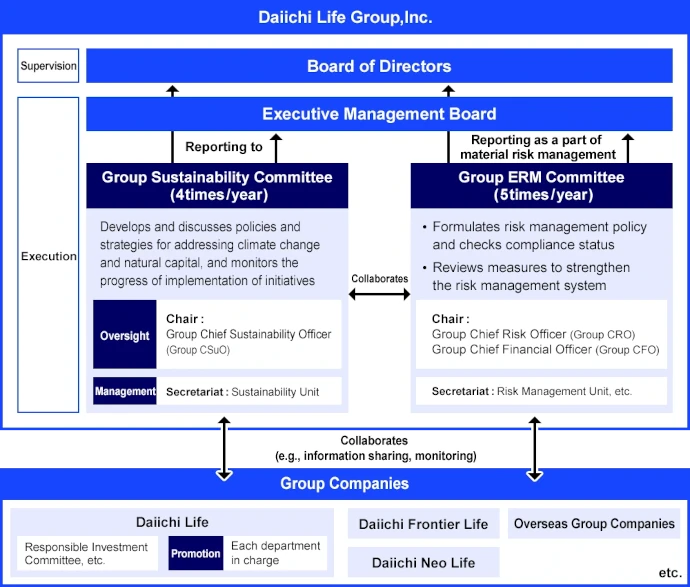
Under the supervision of the Board of Directors and in accordance with its business plan on climate change led by the Executive Management Board, the Group is promoting initiatives related to climate change and natural capital through the Group Sustainability Committee, the Group ERM Committee, and other committees. The status of initiatives is regularly reported to the Executive Management Board and the Board of Directors. By ensuring oversight from the Board of Directors, we have a framework that further strengthens efforts to address climate change and natural capital issues.Alos,sustainability indicators, including an indicator related to progress in reducing CO2 emissions, have been included as part of evaluation criteria of the performance-based stock remuneration for the Group’s executives.
For details of the Governance and Risk Management on Climate Change and Nature, please refer to Sustainability Report (P116~121).
Strategy
We are advancing initiatives that take into consideration impacts on the environment and natural capital, including the development and disclosure of net-zero transition plans and the identification of risks and opportunities. As both a business operator and an institutional investor, we also take into account the activities of international financial initiatives such as GFANZ.
For details, please refer to Sustainability Report (P63~115).
Metrics and Targets
We established multiple indicators both as a business operator and an instutional investor.
For details, please refer to Sustainability Report (P122~124).
Priority Theme⑥ Addressing Environmental Issues Through Investment and Financing
Investing in environment-related solutions
Investments for Addressing Environmental and Social Issues
Daiichi Life pursues sustainability thematic investment to promote investments that contribute to the realization of a sustainable society. Taking into account the global funding gap through 2030 and the AUM (asset under management) of Daiichi Life (DL) and Daiichi Frontier Life (DFL), we have set the cumulative target of 5 trillion JPY for sustainability thematic investments, including 2.5 trillion JPY for the resolution of environmental and climate change issues. We have steadily achieved the target, reaching 3.7 trillion JPY in total for sustainability thematic investments, and 1.9 trillion JPY for the resolution of environmental and climate change issues at the end of FY2025. To expand the positive impact, we also set the target for GHG avoided emissions at 4.5 million tons of CO2e/year by FY2029, and we are making steady progress in achieving 4.21 million tons of CO2e/year in FY2025.
Promoting transition finance
Policy on Transition Finance
To achieve a decarbonized society, it is important to steadily promote a long-term transition strategy focused on industries that have high GHG emissions. To support this transition, Daiichi Life has formulated a policyPDF file will open in a new window setting out its basic approach to and principles for transition finance. Guided by leading frameworks including the four transition finance strategies identied by GFANZ, we actively support the funding needs of companies undertaking transition initiatives and seek to contribute to the achievement of net zero emissions by 2050.
Conducting climate change and nature-related engagement
Engagement Initiatives As an Institutional Investor
Daiichi Life considers engagement with investee companies as one of its core initiatives toward achieving Net Zero emissions. In the Daiichi Life investment portfolio, the top 50 domestic GHG-emitting companies account for approximately 70% to 80% of total portfolio emissions each year. Therefore, we identify companies with high emissions as priority engagement targets and conduct ongoing engagement with a particular focus on climate change. We engaged with 69 companies over the three-year period from FY2023 to FY2025, focusing primarily on those with the highest GHG emissions. In principle, we engage in dialogue with these companies at least once every three years to confirm their target setting for achieving carbon neutrality by 2050, the specificity of their transition plans and roadmaps, and the progress of their reduction measures, among other matters. Through this continued engagement, we aim to support the effectiveness of our investee companies’ decarbonization initiatives while simultaneously reducing GHG emissions across our entire investment portfolio and improving corporate value over the medium to long term.
For details, please refer to Sustainability Report (P65~85).
Priority Theme⑦ Contributing to Nature Positive Through Environmental Conservation Activities
Community-based environmental conservation activities
Community-based environmental conservation activities
Daiichi Life Group carries out community-based environmental conservation activities tailored to the specic conditions of the regions where we conduct business.
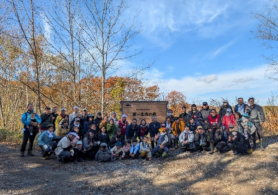

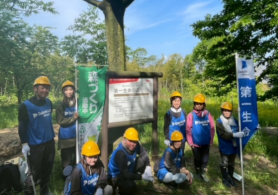
For details, please refer to Sustainability Report (P87~89).
Environmental conservation activities through real estate portfolio
Environmental conservation activities through real estate portfolio
Daiichi Life, which owns investment properties throughout Japan, is advancing initiatives to promote sustainability in both the physical and operational aspects of its buildings. In addition to installing efficient equipment to improve environmental performance during new construction, renovations, and redevelopment, the company works closely with property management firms, including its Group company Daiichi Building, to continuously improve building management and operations, thereby contributing to greater energy efficiency. In addition, we actively promote the revitalization and refurbishment of existing properties, expand the use of renewable energy, and encourage the use of timber, a renewable circular resource. Through these initiatives, Daiichi Life contributes to the realization of a sustainable society while enhancing the well-being of building users.
For details, please refer to Sustainability Report (P90~92).
Priority Theme⑧ Engaging in and Contributing to International Rule-Making
Efforts are being carried out through various international initiatives to address global social issues, such as environmental and climate change issues. Daiichi Life Group has been participating in such global initiatives from an early stage and is actively voicing its opinions in the process of global rule-making.
For details, please refer to Sustainability Report (P93~96).